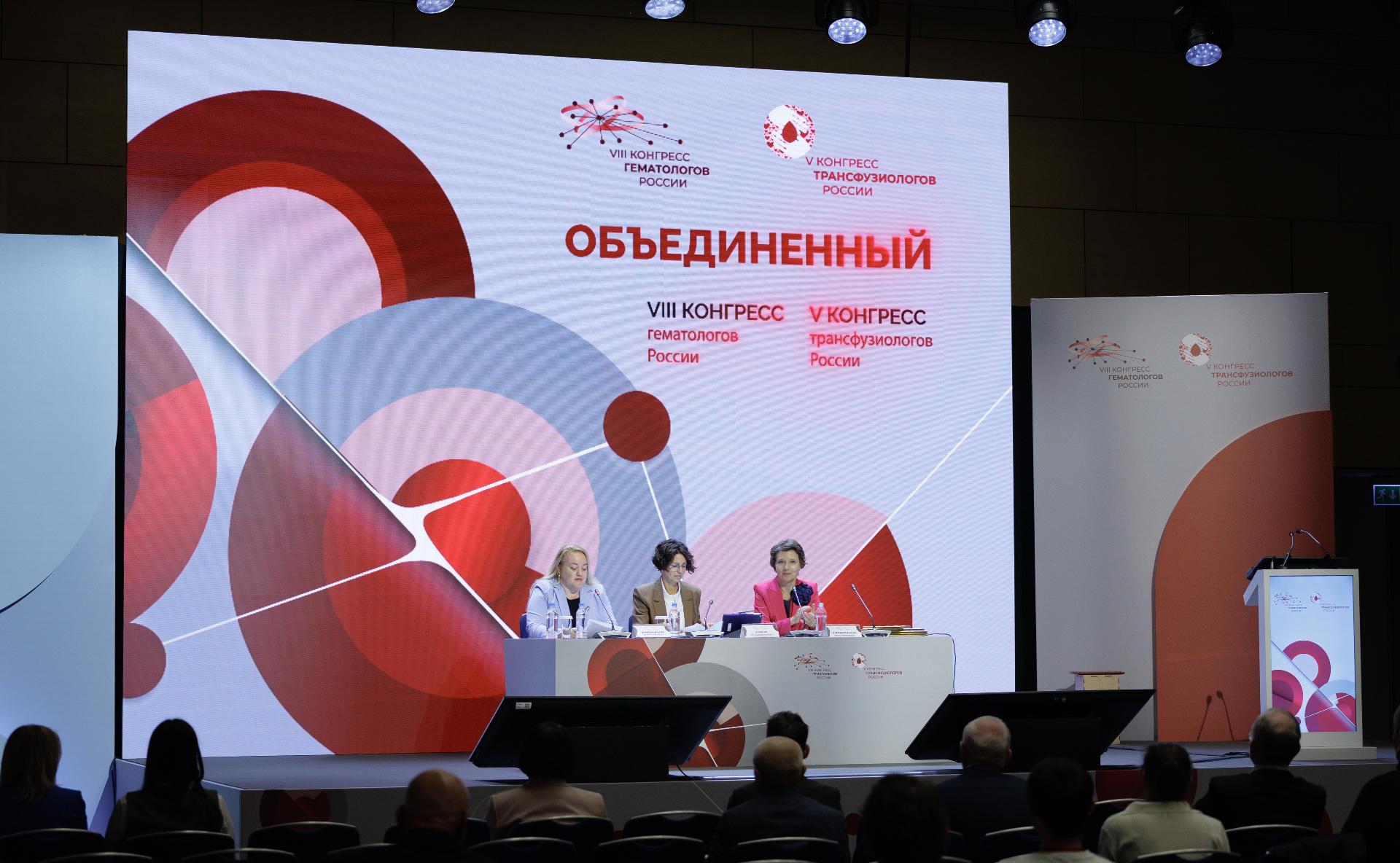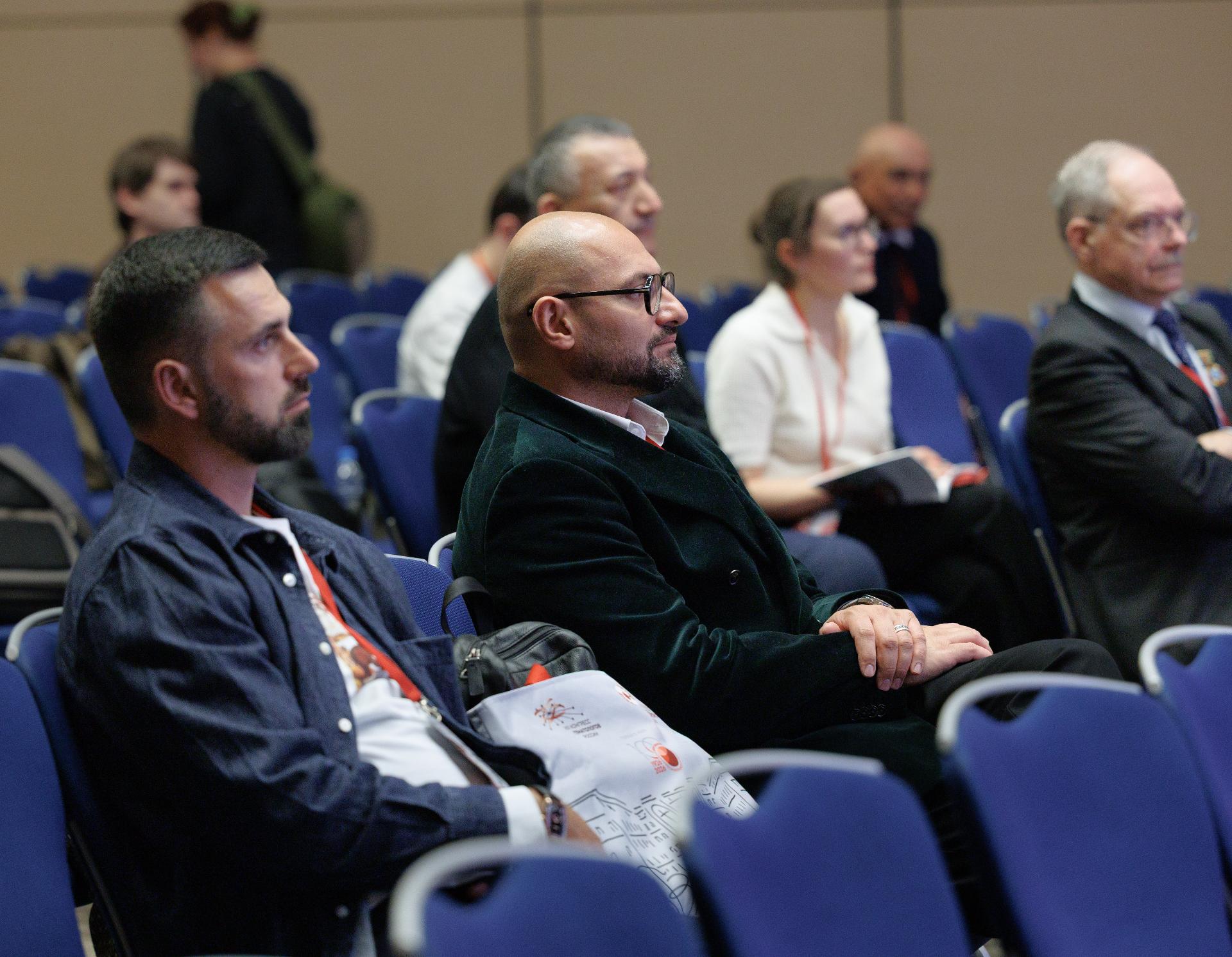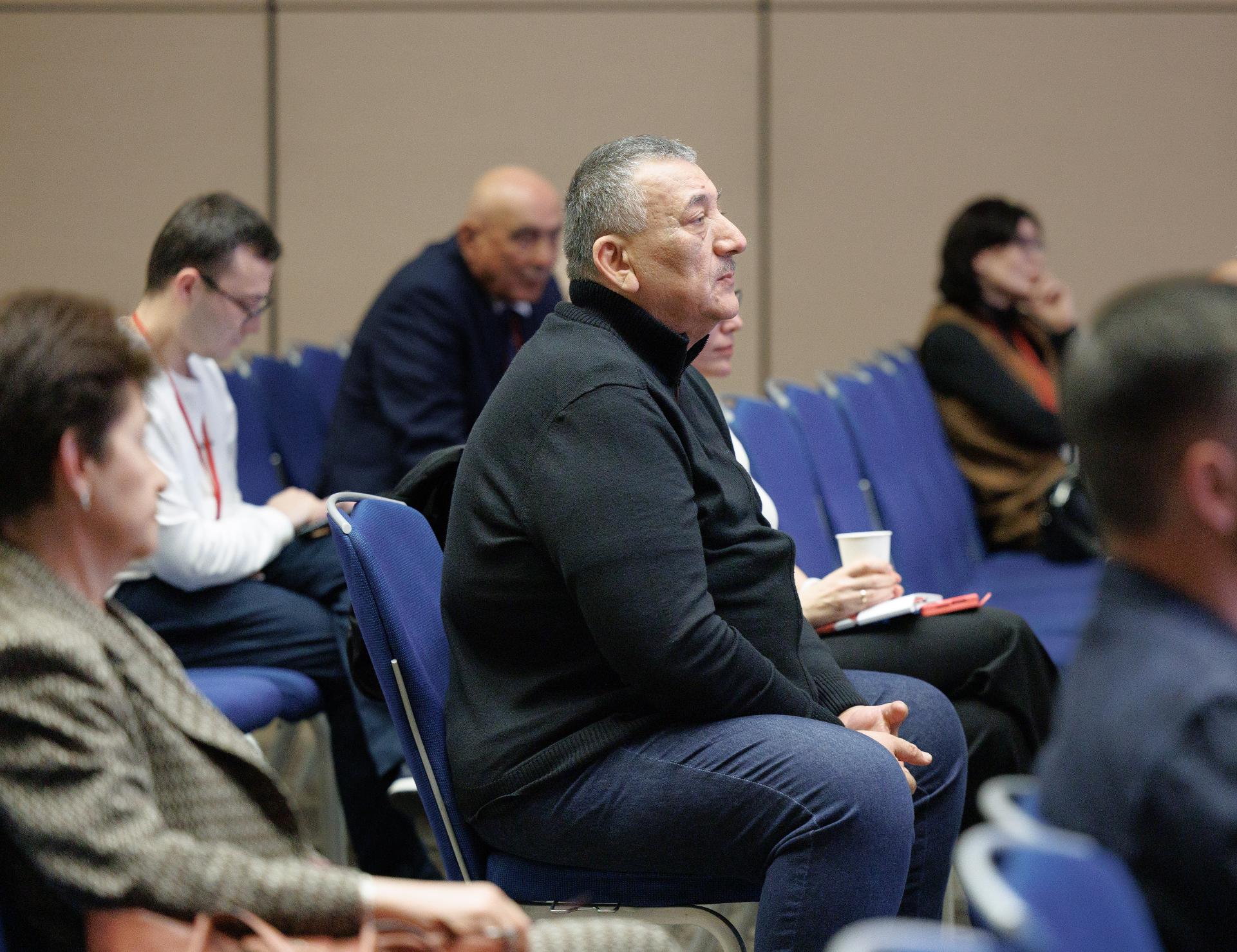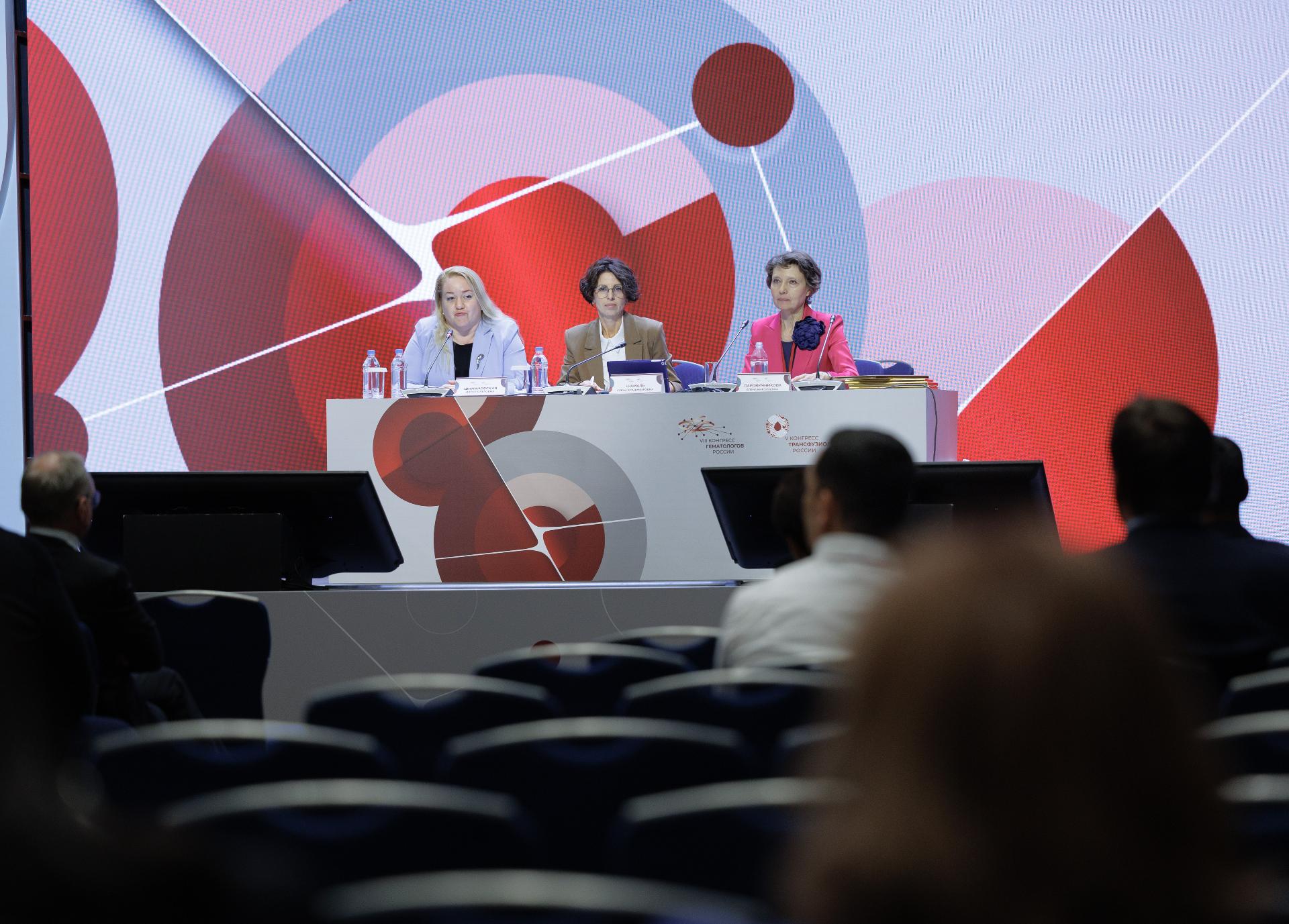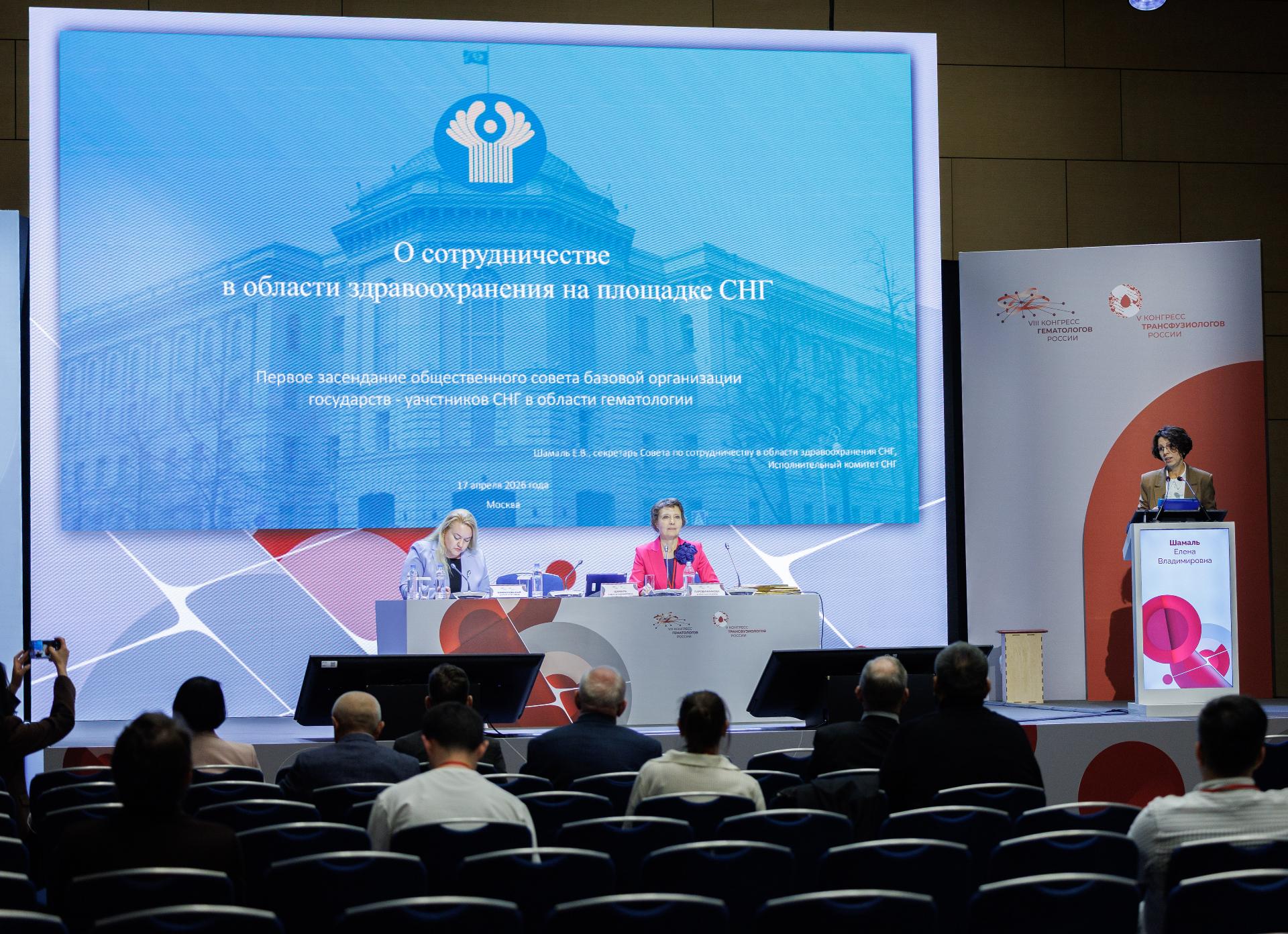





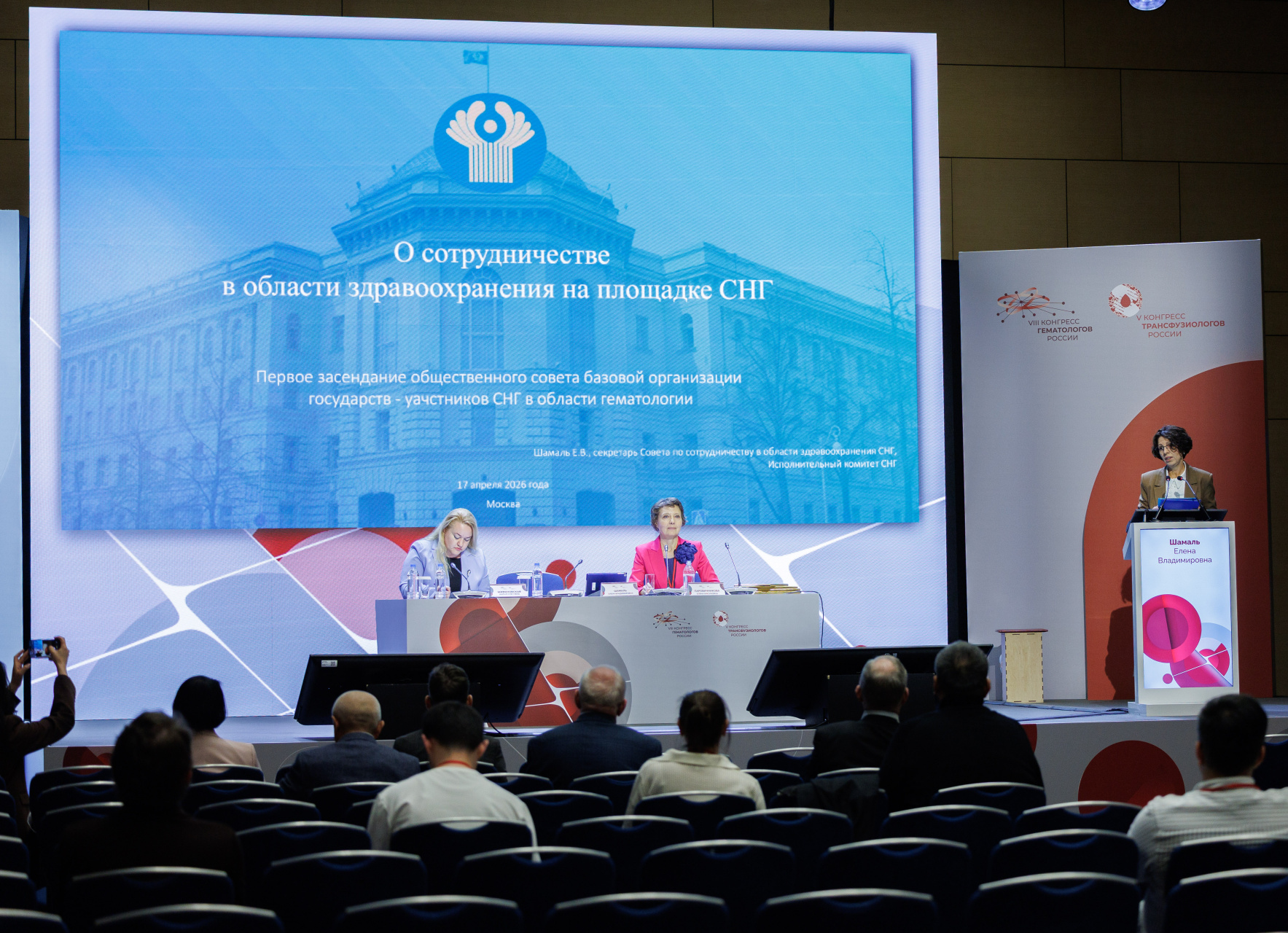
For the first time, the inaugural meeting of the Public Council under the Basic Organization of the CIS Member States in the Field of Hematology took place during the Joint VIII Congress of Hematologists and V Congress of Transfusiologists. The event, which brought together leading specialists from across the post-Soviet space, confirmed that hematology is one of the few fields where professional brotherhood proves stronger than political borders.
The meeting was co-chaired by Elena Parovichnikova, Chief Freelance Hematologist of the Russian Ministry of Health, Chair of the Public Council under the Basic Organization of the CIS Member States in the Field of Hematology, and Corresponding Member of the Russian Academy of Sciences; Elena Shamal, Advisor to the Department for Cooperation in Political, Humanitarian, and Social Spheres, Secretary of the Council for Cooperation in Healthcare; and Daria Shimanovskaya, Deputy Director of the Department of International Cooperation and Public Relations of the Russian Ministry of Health.
Greeting from the CIS Secretary-General: “A Century-Long Period- an Entire Era”
A greeting from CIS Secretary-General Sergei Lebedev was read to the meeting participants. It noted that the work of the Public Council coincides with the Commonwealth's Year of Health Protection. The special mission of the Center was emphasized—not only as a flagship of Russian medicine but also as a key link in providing hematological care across the CIS space.
“A century-long period is an entire era, during which Russian hematology has traveled a tremendous path—from the creation of the world's first Institute of Blood Transfusion to the most complex technologies of gene therapy and transplantation. Today, the Center for Hematology is rightfully a recognized industry leader and the basic organization of the CIS member states, determining the strategic vector of development for this knowledge-intensive field across the Commonwealth. These days, we recall with gratitude the outstanding scientists and physicians whose fundamental work laid the foundation for saving thousands of lives,” the greeting stated.
Baktygul Karrieva, a representative of the WHO Regional Office for Europe, participated online and spoke about the prospects for cooperation in healthcare and hematology in the European region.
The Hematology Service of the Russian Federation in Numbers and Facts
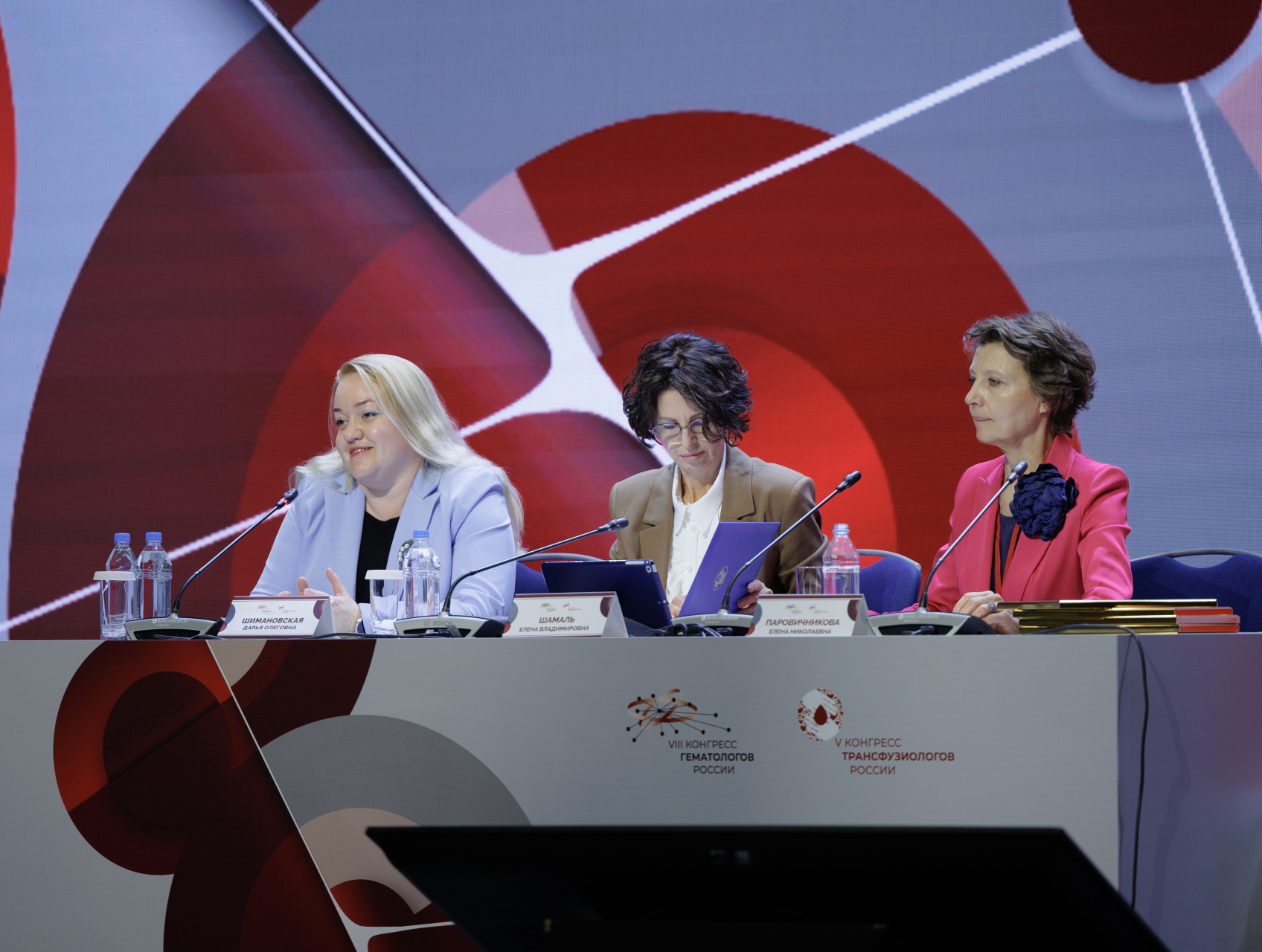
Elena Parovichnikova, Chief Freelance Hematologist of the Russian Ministry of Health, presented a detailed report on the state of the hematology service in the Russian Federation. Data covering five years on morbidity among the adult population for both neoplastic and non-neoplastic blood system diseases were presented. The organizational model of the hematology service, staffing levels, the stages of medical care delivery, the dynamics of opening transplant centers in Russia, and the performance of bone marrow and hematopoietic stem cell transplants in the adult population were all outlined.
It was noted that over five years, the number of patients with neoplastic blood diseases who have been under observation for more than five years increased by 26 percent, confirming the exceptional effectiveness of the hematology service and the healthcare system.
Elena Nikolaevna once again recalled the words of Academician A.I. Vorobyov, Director of the National Medical Research Center for Hematology from 1987 to 2011: “Patients must not die from curable diseases.” The report presented data on cutting-edge scientific research being translated into practice, including the implementation of scientific developments into in-house production. The NMRC for Hematology is an active participant in government assignments to develop an anti-BCMA CAR-T-cell drug, medical devices for local use with hemostatic and osteoconductive effects, and research on Gram-negative bacterial resistance.
The Center conducts its own clinical prospective studies based on new diagnostic and treatment protocols, monitors residual tumor cell populations, develops CAR T-cell technologies, evaluates immune imbalance, clonal hematopoiesis, and microbial genetic resistance, and develops test systems for molecular diagnostics and blood plasma-based drugs, as well as AI systems to support clinical decision-making.
Using innovative educational technologies, the NMRC for Hematology trains physicians through higher education programs in residency and postgraduate studies, primary specialized accreditation in “Hematology” and “Transfusiology,” continuing professional education programs, and faculty development courses. The Center operates an innovative continuing education portal and a methodological accreditation and simulation center. To promote the hematology profession, Center physicians run a student club for medical university students.
International Cooperation: From Memorandums to the First Allo-HSCT in Uzbekistan
The NMRC for Hematology of the Russian Ministry of Health treats more than 400 foreign citizens annually. Cooperation agreements in medical education and science have been signed with the Republics of Belarus, Armenia, Uzbekistan, and Iran. Technology transfer and support, as well as adaptation of best practices, are ongoing. An International Training Center for the treatment of patients with hemophilia and other coagulopathies operates for countries of Eastern Europe and Central Asia.
A landmark event: On the 15th of March 2023 – the first allo-HSCT (allogeneic hematopoietic stem cell transplantation) was performed, introducing transplant technologies in the Republic of Uzbekistan (cities of Tashkent and Samarkand). The training of specialists was conducted by Mikhail Drokov, a researcher at the NMRC for Hematology.
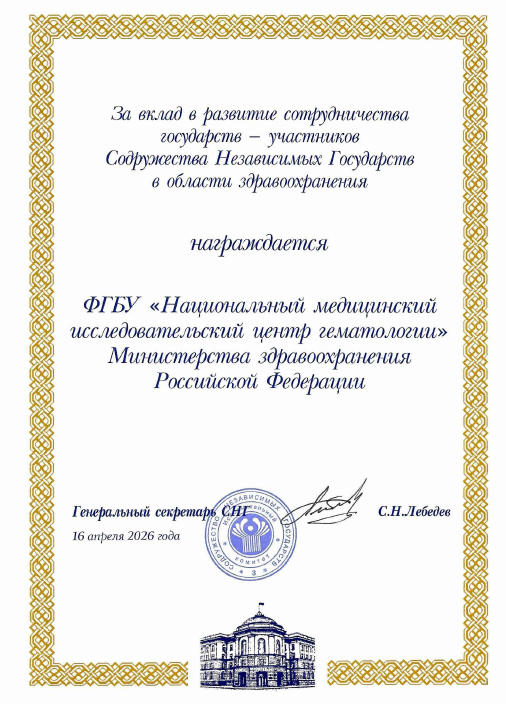
The National Medical Research Center for Hematology of the Russian Ministry of Health has received high recognition for its contribution to the development of cooperation among CIS member states in healthcare. The Center was awarded a certificate of commendation from the Executive Committee of the Commonwealth of Independent States and was also presented with the commemorative medal named after A.A. Bagdasarov, established by the Eolyan Hematology and Oncology Center (Republic of Armenia). These awards are the result of the Center's many years of work as an organization uniting the efforts of specialists from different countries in the fight against blood system diseases.
Representatives from the Republic of Belarus, the Republic of Kazakhstan, the Republic of Uzbekistan, the Republic of Tajikistan, and the Republic of Armenia also presented their achievements in hematology and organizational approaches at the meeting.
Daria Shimanovskaya noted: “The mechanism of the Basic Organization's Public Council allows us to identify not only problems but also pressing agenda items, share achievements, learn from each other's experience, and move forward together. We are continuers of one medical school; we speak the same language, and that is something to preserve. I think every nation has some parable about how individual twigs are easy to break, but together they form a great force.”
Elena Parovichnikova concluded: “The key word in everything we discussed today is ‘together.’ We were historically together, then there was a period when we were somewhat scattered, and now it is time to gather the stones. We fully understand that difficult, complex, and lengthy undertakings are not accomplished quickly, but if we know the clear route, we will certainly reach our goal.”