




Alina Grigorieva learned about the Project “I Will Live!” last year, when she had the opportunity to meet her bone marrow donor. Acute myeloid leukemia, a transplant, three years of remission — and today, Alina herself is participating in the project.

Alina Grigorieva was in her fourth year of medical college when her temperature spiked and couldn't be brought down by any medication, not even antibiotics. Later, she would reproach herself for not becoming alarmed sooner — after all, they had already started studying hematology. And when her complete blood count showed a large number of blast cells, everything became clear.
First emotions and the start of treatment
“The first emotions were, of course, terrible,” Alina recalls. “I didn't have that ‘No, this can't be true’ reaction. I kept asking myself why and how this happened, and why I couldn't have suspected it earlier. There were no symptoms that would have told me something was wrong in my body — my temperature just went up, and that was it.”
“Your” doctor
“I went to the hospital — the Obninsk Medical Research and Clinical Center — and the examinations began. I had a bone marrow puncture, a lumbar puncture, and started chemotherapy on the ‘7+3’ regimen (I had two cycles), and then moved on to the next protocol. My first doctor, Natalia Vladimirovna Ryabikina, said: ‘We are all like little robots. You just had a certain cog fall out, but it can definitely be fixed.’ And those words motivated me tremendously. She also supported me on a more human and personal level. So, I want to tell all patients that the most important thing is to find your doctor — the person who will support you throughout the entire journey, explain things, someone you can share everything with and not be embarrassed to tell when you're feeling unwell. And most importantly — never give up.”
At that time, allogeneic bone marrow transplants were not yet performed in Obninsk — so I ended up at the NMRC for Hematology. My doctor became Elmira Ilgarovna Kolgaeva. The donor activation took about three months; by that point, roughly six months had passed since the start of treatment.
The toughest moment

“It came when I learned that I hadn't achieved complete remission after the first round of chemotherapy. That was very frightening — a moment of despair. I thought about how everything would proceed from there, that a bone marrow transplant awaited me. And we had talked about this in college when we started studying hematology. When a healthy person hears about it, it all seems very daunting: that they destroy all your bone marrow, what happens during engraftment, the fact that the marrow might not take at all. And when you realize that you'll have to face this — it's terrifying. Because all kinds of thoughts run through your head: what if something goes wrong, what if there are infectious complications, fungal complications? It all spins around in your mind, and at that moment, of course, it's scary.”
Support
“My family and close ones supported me. At first, when I got sick, I asked that no one outside the circle be told — I was under a huge amount of stress, I had gained weight from hormonal therapy, and my head had been shaved. It was all very difficult, and I didn't want outsiders to gossip about it. So initially everything stayed within my inner circle — a few friends, my parents. Everyone supported me. My parents would come to the hospital on weekends and always bring something from home — a little toy, homemade food. It was very heartwarming.”
Home for my birthday
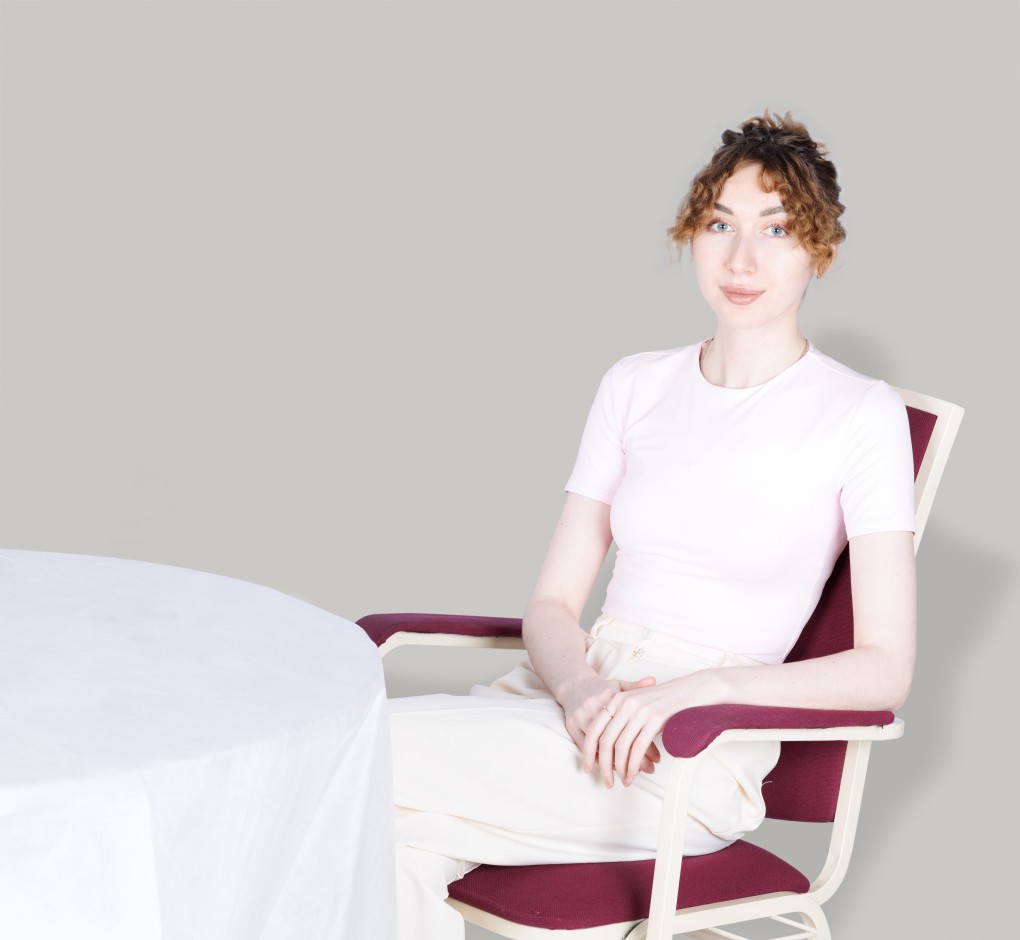
“I think I started to turn a corner after my birthday. My birthday is in March, and I was discharged home — I turned 21. After that birthday, I realized that I had a chance and a very good one. And I also motivated myself by thinking that I needed to lose weight by summer, that I needed to stop wearing oversized clothes, that I could go outside without a wig — after all, people will say something anyway. I had this wig — blue, with a short cut. When I walked down the street, people would give me disapproving looks. And I'd walk and think, ‘They don't understand anything.’ But then, when I was able to go out with my own short hair, I felt comfortable. And at that moment I realized — that's it, I need to push the treatment process toward completion. After all, I still needed to finish medical school. So, I returned to my studies six months after the transplant.”
Meeting my donor
“We met with my donor last year. She's a wonderful woman named Anastasia from Perm — I think we even look somewhat alike. We keep in touch; whenever I have questions, for example, about certain taste preferences, I ask her. My attitude toward some foods has changed — I never used to eat olives, and I never had an allergy to honey, but after the transplant that changed. Before the transplant, I had read that some things might change. But maybe it's just a coincidence — I don't know for sure yet. Anastasia and I also share some personal moments and congratulate each other on holidays.”
Life after illness
“I've been in remission for three years now. I work as a radiology technician, and I'm studying to become a psychologist online. I read books, go for walks, travel when I can. I spend time with friends, go to the pool, do stretching — in short, I do all the things I couldn't do for a while before.”
Never give up

“To other patients with an oncology diagnosis, I would say today: you cannot give up. In the most desperate moments, you have to believe that success will come and that it's all not in vain. I agreed to participate in the Project “I Will Live!” because people need to know that there are many positive outcomes. When people first encounter a disease like this, they are terrified. And many think that there's no point in going through this journey. In reality, that's not true. There are people who stay in remission for a very long time, and they will be in remission for their entire lives. And I believe in that. And I want to show through my own example that there is life after illness.
Today, for me, the art of living is finding joy in any moment. For example, not waiting for vacation to go on a trip, but stepping outside and seeing that there is so much beauty all around. And you don't necessarily have to go somewhere or run away from what is here and now.”