




The Congress will feature leading Russian and international scientists in the fields of hematology, transfusiology, bone marrow transplantation, cell therapy, intensive care, clinical microbiology, clinical and fundamental research, and other priority areas.
“This year, the Congress coincides with the centenary of the founding of what is now the National Medical Research Center for Hematology, formerly the State Scientific Institute of Blood Transfusion. It was on the 26th
of February 1926, that the history of the blood service and the hematology service of our country began,” noted Elena Parovichnikova, General Director of the NMRC for Hematology of the Russian Ministry of Health, Chief Freelance Hematologist of the Russian Ministry of Health, Corresponding Member of the Russian Academy of Sciences, and Doctor of Medical Sciences. “I believe that the contribution to the development of our medicine, our science, transfusiology, hematology, our institute, the entire service, and all those medical organizations and institutes that were part of the interaction network and common information space is very difficult to overestimate. We have always believed that hematology and transfusiology are two wings of one broad specialty, that special area of internal medicine to which our Congress will be dedicated.”
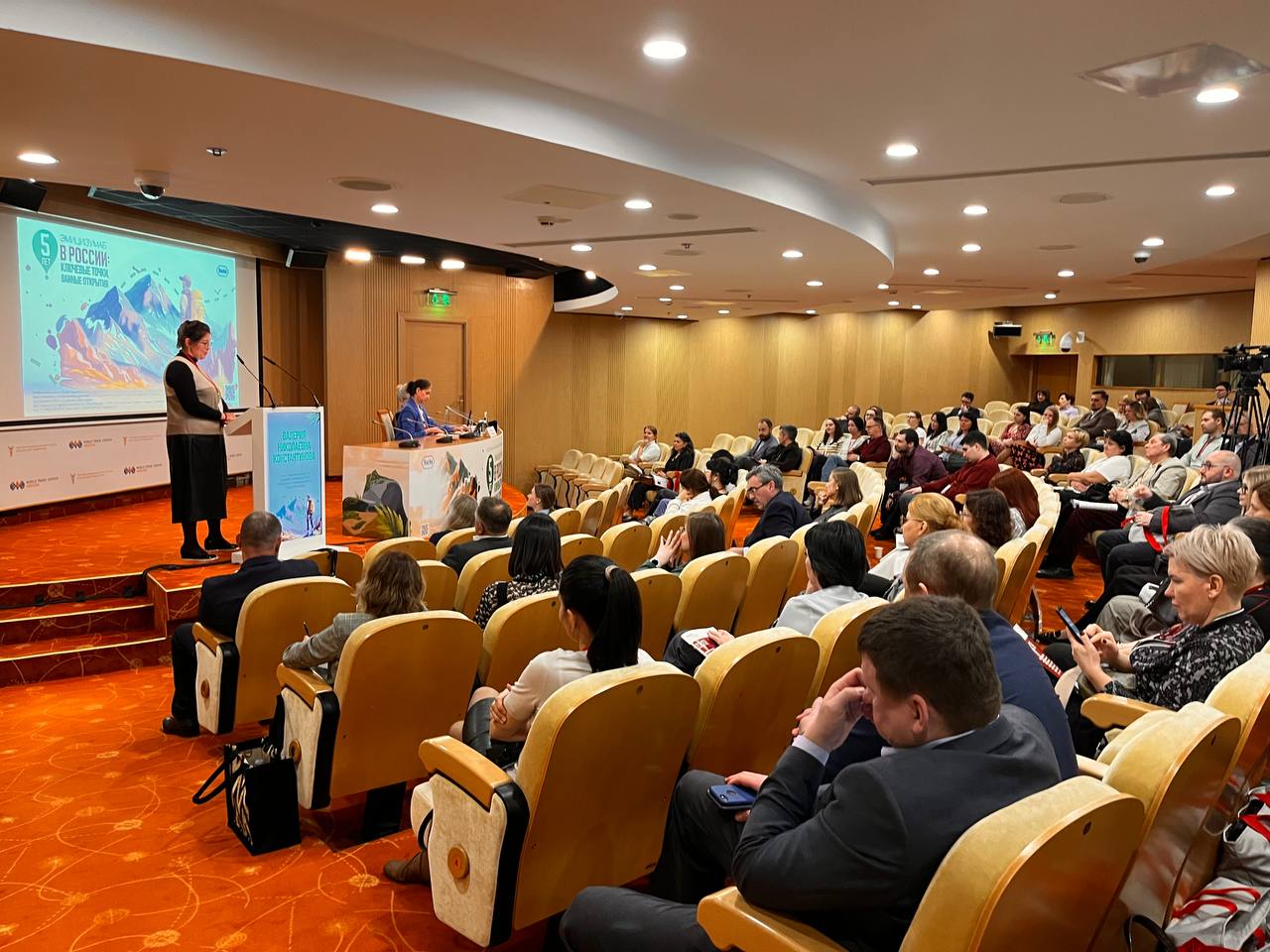
The Congress program includes 25 scientific sections and 11 educational lectures. Representatives from more than ten foreign countries will attend. Approximately 700 abstracts have been submitted: the authors of the best 127 papers have been invited to give presentations, and 98 authors will participate in the poster exhibition.

Within the Congress framework, experts plan to examine all aspects of treating patients with blood system diseases — both malignant and non-malignant. Topics will include molecular diagnostics, morphological, pathomorphological and genetic diagnostics, treatment, CAR T-cell therapy, supportive care, and toxicity management.
Sessions of the specialized commissions on hematology and transfusiology are planned. For the first time, a meeting of the Public Council of the Basic Organization of CIS Member States in the Field of Hematology has been included in the program, underscoring the role of Russian specialists in developing international cooperation in the post-Soviet space. A meeting of the Expert Council on Interlaboratory Cooperation will also take place.
“The activity of this council is still very brief — no more than three years — but nevertheless, significant successes have already been achieved in establishing cooperation in the fields of molecular and genetic diagnostics, pathomorphology, and flow cytometry,” noted Elena Parovichnikova.
As part of the Congress, “Donor Saturday” will be held, along with meetings of two specialized commissions of the Russian Ministry of Health — on hematology and on transfusiology.
“We invite everyone interested in developing and expanding their knowledge in the fields of transfusiology, donation, stem cell collection, efferent methods, and blood component safety,”
noted Tatiana Gaponova, First Deputy General Director of the NMRC for Hematology of the Russian Ministry of Health, Chief Freelance Transfusiologist of the Russian Ministry of Health.

The plenary session of the Congress will feature unique experts and scientists from leading universities: Sechenov First Moscow State Medical University, Pirogov Russian National Research Medical University, and the Russian University of Medicine. Leading scientists and specialists will share with participants the points of interaction and cooperation with areas of internal medicine that are being developed in various university clinics.
Patient organizations working in the field of hematology will participate in the Congress for the second time. “I think that a view of our work from a different perspective — not from the perspective of healthcare organizers, but from the perspective of patients — is also very important to us,” noted Elena Parovichnikova.
The interdisciplinary nature of the Congress is evidenced by the number of reports from representatives of various specialties. An important task is to ensure that the experience of successfully treating the most complex cases is disseminated as widely as possible.
“I am very glad that this year we have the opportunity to meet in person. Personal communication, the live dialogue we so value, is with us once again. I am glad to see our friends — hematologists, doctors of related specialties, researchers. Without you, without this multidisciplinary approach, modern hematology cannot exist. We truly have much to discuss. I wish us all new knowledge, new perspectives, new contacts, new interactions, new scientific developments. And I hope we will succeed,” noted Elena Nikolaevna.
Venue: Moscow, Congress Center of the World Trade Center. Address: Krasnopresnenskaya Naberezhnaya, 12
Registration for online participation is open until 1 April 2026, on the website of the National Hematological Society: https://npngo.ru